

How Matcha Became a Global Obsession
A decade ago, ordering a matcha latte at a cafe outside of Japan felt like a niche request. Baristas in most American cities would have needed a moment to confirm they even had it on hand, and the drink that arrived might have been made with a culinary powder mixed cold into milk with a spoon. Today, the picture is completely different.
Matcha is on the menu at cafes across San Francisco, featured in cookbooks, stocked at grocery stores in multiple grades, and showing up in everything from morning lattes to afternoon pastries to ice cream and chocolates. The shift happened fast and it happened everywhere at once, which raises a genuinely interesting question: how did a powdered green tea with roots in ancient Japanese culture become one of the most talked-about drinks in global cafe culture?
The answer involves history, health, social media, and the particular way that food culture in cities like San Francisco absorbs and elevates things it finds genuinely worthwhile. It did not go global by accident. It rode a wave of factors that aligned at just the right moment, and understanding that story makes the drink feel like more than just a trend. It becomes a window into how food culture moves and why certain things, when the timing and the substance are both right, go from obscure to everywhere seemingly overnight.
Where Matcha Came From and How It Was Used
Matcha has a history that stretches back roughly a thousand years. The practice of grinding tea leaves into a fine powder and whisking them into hot water was brought from China to Japan by Buddhist monks in the 12th century. In Japan, this preparation became central to Zen Buddhist practice, where the ritual of preparing and drinking tea was used as a form of meditation and mindfulness. The careful, deliberate movements of whisking, the attention to water temperature, the quiet focus required to prepare the tea correctly all reinforced values of presence and simplicity that were central to Zen philosophy.
Over time, the practice evolved into what became known as the Japanese tea ceremony, a formalized ritual called chanoyu that governed every aspect of how tea was prepared, served, and received. The tea ceremony became deeply embedded in Japanese culture and was practiced not just in Buddhist temples but in the homes of samurai, aristocrats, and eventually everyday people across Japanese society. The matcha used in these ceremonies was cultivated with enormous care.
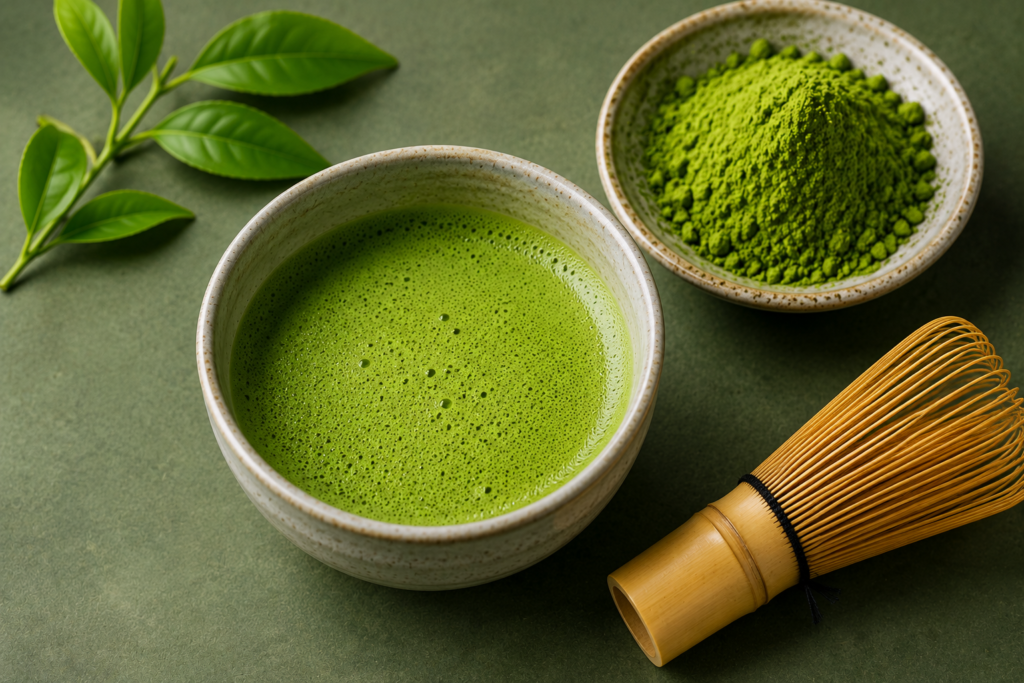
Tea plants were shaded from direct sunlight in the weeks before harvest to boost chlorophyll and amino acid content, the leaves were hand-picked and stone-ground at a pace that preserved their delicate flavor compounds, and the resulting powder was treated as a precious ingredient rather than an everyday commodity.
For centuries, matcha remained almost entirely within Japanese culture. It was exported in small quantities and occasionally written about by Western travelers who encountered it, but it did not find any meaningful audience outside of Japan. The conditions that would eventually bring it to a global audience simply did not exist yet. They started to develop in the late 20th century and then accelerated dramatically in the 2010s.
The Shift That Brought Matcha to the World
Several things happened in sequence that created the conditions for matcha’s global rise. The first was a growing interest in Japanese food culture broadly. Sushi had already made its journey from a niche ethnic food to a mainstream American staple, and along with it came a broader cultural curiosity about Japanese ingredients, flavors, and food traditions. People who had come to love Japanese food were more open to exploring other aspects of that cuisine, and matcha was a natural part of that expansion.
The second factor was the health conversation. By the early 2010s, consumers in the United States and across Europe were paying much closer attention to what they ate and drank. The antioxidant content of matcha, the presence of L-theanine, the fact that you consume the entire leaf rather than just a steeped infusion, all of these aspects positioned it as a genuinely functional drink rather than just a pleasant one. Health-conscious Bay Area foodies and foodie culture more broadly were already primed to embrace a drink that tasted good and had real nutritional substance behind it. Matcha checked those boxes in a way that few other beverages could match at the time.
The third and probably most visible factor was social media, particularly Instagram. Matcha is one of the most visually distinctive drinks available. Its vivid, saturated green color photographs beautifully, especially when poured into a ceramic cup, layered against steamed milk, or used as an ingredient in a brightly colored pastry or cake. At a moment when cafe culture was becoming deeply intertwined with visual storytelling, matcha arrived looking like it was designed for the format.
Cafes that added matcha lattes to their menus quickly found those drinks showing up in customer photos and spreading to audiences far beyond their own neighborhood. The visual appeal drove curiosity, and the curiosity drove sales, which drove more cafes to add matcha, which produced more photos, and the cycle built on itself.
Cities like San Francisco were especially fertile ground for this process. The Bay Area food scene has always rewarded innovation and quality in equal measure, and it has a large population of both health-conscious consumers and food-forward adventurers who are genuinely interested in trying something new. When matcha arrived in SF cafes, it was not just adopted. It was embraced with real enthusiasm by people who appreciated both its flavor and its story. The best coffee shops in SF began offering matcha lattes made with ceremonial grade powder and proper preparation techniques, which meant Bay Area coffee lovers got to experience matcha at a quality level that made a genuine impression.
Why Matcha Has Staying Power Beyond the Trend
Many food trends rise and fall quickly, burning bright for a season or two before fading as the next thing arrives. Matcha has not followed that pattern. It has been popular for long enough now that calling it a trend feels inadequate. It has settled into a permanent position on cafe menus and in the daily routines of a large and growing number of people, and there are good reasons for that staying power.
The flavor is genuinely complex and enjoyable on its own terms. Unlike some food trends that are driven purely by novelty or visual appeal, matcha has a flavor profile that rewards repeated experience. The earthy, umami-rich depth of good ceremonial matcha, with its natural sweetness and clean, lingering finish, is something that people come back to because they enjoy it, not just because it is interesting or photogenic. The more time someone spends with matcha, the more they tend to appreciate its nuance, which is the same quality that gives coffee and tea their long-term appeal.

The health aspects have remained consistent. The research on matcha’s antioxidant content, the effects of L-theanine and caffeine working together, and the potential long-term benefits of regular green tea consumption has not disappeared or been contradicted. If anything, ongoing research has continued to support and expand the understanding of what makes green tea, and matcha in particular, a genuinely beneficial part of a balanced diet. For the health-conscious side of San Francisco food culture, this sustained scientific backing matters and contributes to why matcha has not been replaced by the next new thing.
The versatility of matcha as an ingredient has also supported its longevity. It works as a hot drink, a cold drink, a baking ingredient, a flavoring for ice cream, a layer in parfaits, and a component in savory sauces and marinades. This range of applications means that matcha can show up across an entire menu rather than being limited to a single drink category. For a brunch cafe that wants to offer something distinctive and genuinely popular, matcha creates opportunities across the menu in a way that fewer ingredients can.
Matcha in San Francisco Today
Walking into almost any well-regarded SF cafe today, you will find at least one matcha drink on the menu, and often several. The standard has risen considerably from the early days when matcha lattes were sometimes made with culinary grade powder stirred roughly into milk. Thoughtful cafes now use ceremonial grade matcha, whisk it properly into a small amount of hot water before adding steamed milk, and treat the drink with the same care they bring to espresso preparation. This elevation of quality is part of why the matcha conversation in the Bay Area has matured from novelty to standard.
Barista Coffee & Brunch on Sacramento Street is part of this cafe culture, bringing together hearty breakfast classics and fresh, flavorful brunch creations in a space where the drinks menu is taken just as seriously as the food. Whether you are a longtime matcha devotee or someone who has been curious but has not found the right place to try it properly, a well-made matcha drink alongside a satisfying brunch plate is one of those combinations that reflects the best of what San Francisco food has to offer: quality ingredients, genuine care, and a willingness to embrace things that are worth embracing.
Matcha went global because it deserved to. It has history, health, flavor, and visual appeal all working together, and it arrived at a moment when food culture was ready to receive it. That combination does not come together often, and when it does, the results tend to last. Matcha is not going anywhere, and for coffee lovers, foodies, and brunch regulars across the Bay Area, that is genuinely good news.