

Homemade Quiche San Francisco That Tastes Like Someone’s Kitchen and Not a Hotel Buffet
My friend Sylvia grew up in Lyon which she will tell you is the gastronomic capital of France and possibly the world depending on how far into the conversation you are and how much wine has been involved. She moved to San Francisco eight years ago and has made a generally successful peace with the food landscape here which she considers excellent by any reasonable standard except when compared to Lyon at which point the comparison becomes unfavorable for everywhere that is not Lyon.
She has one specific and recurring complaint that she raises with the consistency of someone who has accepted that the complaint is valid and permanent and worth continuing to register anyway.
The quiche.
Not the absence of quiche. San Francisco has quiche. It has quiche at cafes and at brunch spots and at various places that put savory pastries in glass cases and call the Tuesday morning complete. The problem is not the quantity of quiche available in this city. The problem is what most of that quiche actually is which Sylvia describes with a precision that comes from knowing exactly what quiche is supposed to be.
She says most quiche in San Francisco tastes like it was made to look like quiche rather than to taste like quiche. The custard is wrong. The crust is wrong. The filling ingredients are present in a technical sense without being present in a flavorful sense. The whole thing sits in the case looking exactly like what quiche looks like and delivering none of what quiche is supposed to deliver.
She went to Barista Coffee and Brunch because her neighbor mentioned it and mentioned specifically the quiche in a way that made Sylvia decide it was worth investigating. She went on a Wednesday morning. She ordered a slice. It arrived warm. She cut into it with a fork and looked at the cross section the way she looks at things she is evaluating seriously.
She tasted it. She was quiet for a moment.
She said the custard is right.
From Sylvia about quiche in San Francisco that sentence contains more information than most reviews contain in five paragraphs. The custard is right means everything that needed to happen for the quiche to be quiche actually happened and the result is something she recognizes as the dish rather than as a representation of the dish.
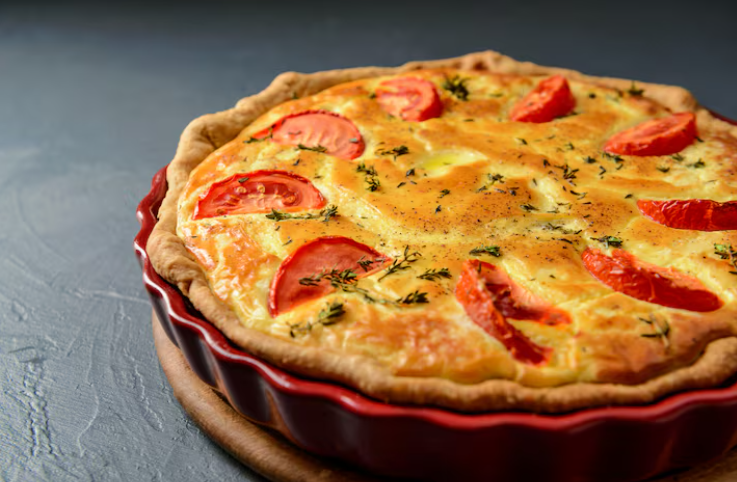
She has been back many times since that Wednesday. She orders the quiche almost every visit. She has stopped complaining about quiche in San Francisco specifically because the complaint no longer applies at the place she goes.
What Quiche Actually Is and Why the Custard Is the Whole Argument
Quiche is a savory custard tart. That description is both simple and containing everything that matters about what the dish is and what it requires to be done correctly.
The custard is the foundation and the defining element. Everything else, the crust, the filling ingredients, the cheese, whatever vegetables or proteins are involved, exists in service of and in relationship to the custard. The custard is what makes quiche quiche rather than a savory pie or an egg tart or any other category of baked egg dish.
A proper custard for quiche is a mixture of eggs and cream in proportions that produce a specific texture when baked. The texture is neither fully set like a hard boiled egg nor runny like an undercooked egg. It is something specific to custard, silky and slightly trembling when just done, set enough to slice cleanly but yielding enough to have a quality that registers in your mouth as something intentionally delicate rather than accidentally undercooked. The French word for this texture is onctueux which translates approximately to unctuous or silky and which doesn’t have a precise English equivalent because English has historically not cared as much about this specific quality as French cuisine has.
Achieving this texture requires the right ratio of eggs to cream and the right baking temperature. Too many eggs relative to cream produces a custard that’s rubbery and dense. Too much cream relative to eggs produces a custard that doesn’t set properly and weeps liquid into the crust. Too high a baking temperature produces a custard with bubbles in it from the proteins setting too fast, a slightly grainy texture instead of the smooth silky one. Too low a temperature and the custard takes too long to set and the crust becomes soggy in the process.
The window of correct is specific and getting there requires either experience or precise recipe development or ideally both. Most cafe quiche misses this window in the direction of too dense and too eggy because erring on the side of setting firmly seems safer than risking something that doesn’t hold together when sliced. But firmly set quiche is not quiche in the sense that matters. It’s egg pie with a label.
Sylvia can tell from looking at a cross section of quiche whether the custard is right. The way it sits on the plate, whether it maintains its shape while having visible silkiness, whether the slice has clean edges or rough torn ones, these things tell her before she tastes it whether what she’s been given is the real thing.
At Barista Coffee and Brunch it’s the real thing. That’s what the custard is right means and why it contains everything.
The Crust Because a Good Custard in a Bad Crust Is an Incomplete Achievement
The custard being right is necessary but not sufficient. The crust needs to be right too and the crust has its own set of requirements that are separate from the custard requirements and equally unforgiving when not met.
A proper quiche crust is a short crust pastry, what the French call pâte brisée, made from flour and butter and a small amount of liquid worked together until the butter is in small pieces throughout and the mixture is just combined enough to hold together when pressed. It is not sweet. It is buttery and slightly savory and has a texture that is crumbly and tender when you eat it but strong enough to contain the custard without collapsing during baking or becoming soggy from the custard’s moisture.
The blind baking step is what separates quiche crusts that work from quiche crusts that don’t and it’s the step that gets skipped most often because it adds time and requires attention that a busy kitchen doesn’t always have available. Blind baking means baking the empty crust shell before the filling goes in, usually with weights to prevent the bottom from puffing up, until the crust is partially or fully set.
A properly blind baked crust maintains structural integrity when the custard is added and throughout the baking process. A crust that went in raw with the custard absorbs moisture from the custard before it can set and produces the specific disappointment of soggy quiche bottom that Sylvia describes as evidence that the person making the quiche either didn’t know or didn’t care about the step that prevents it.
The crust at Barista Coffee and Brunch was clearly blind baked. Sylvia confirmed this in the same cross section assessment she used for the custard. She said the bottom crust was set and had structure and wasn’t wet in the way that tells you the baking was sequential rather than simultaneous. Coming from Sylvia this level of structural observation is completely normal and the fact that the observation was positive is the whole point.
The Filling Because It Needs to Be Real Ingredients That Actually Have Flavor
Quiche fillings exist on a spectrum from minimal to abundant and the right level depends on what kind of quiche is being made and what role the filling is supposed to play relative to the custard.
The Lorraine tradition, quiche Lorraine being the canonical form of quiche from which all variations descend, uses lardons which are small pieces of cured pork fat and sometimes gruyere cheese alongside the custard with nothing else. The filling is minimal because the custard is the point and the lardons and cheese are there to add richness and flavor to the custard rather than to fill the quiche with ingredients in the way a frittata or an egg bake might be filled.
Contemporary quiche often has more filling than the Lorraine tradition would recognize, vegetables and proteins distributed throughout the custard in quantities that make the quiche feel more substantial and that appeal to people who want their savory tart to do more work as a meal than the traditional version does. This is fine as long as the ingredients are genuinely flavorful and distributed correctly and don’t overwhelm the custard to the point where the defining characteristic of the dish disappears.
The failure mode with vegetable heavy quiche is wateriness. Vegetables that weren’t cooked before going into the custard release moisture during baking that disrupts the custard’s setting process and produces a wet watery quiche with a compromised texture. Spinach is a particular culprit. Raw spinach contains an enormous amount of water that has to go somewhere during baking and where it goes is into the custard. Properly prepared spinach for quiche gets wilted and squeezed of excess moisture before it goes anywhere near the custard and the resulting quiche is different from the waterlogged version in every meaningful way.
Caramelized onions in quiche are a different thing from raw or barely cooked onions in quiche. The caramelization process takes a long time, genuine caramelization requires thirty to forty minutes of slow cooking rather than the five minutes some recipes imply, and it transforms onions from sharp and raw tasting to sweet and deeply savory and complex in a way that contributes genuine flavor to the custard rather than just onion presence.
Barista Coffee and Brunch prepares filling ingredients correctly before they go into the custard. Sylvia identified this from the texture of the custard which remained properly set rather than disrupted by vegetable moisture and from the flavor of the filling ingredients which had the quality of things that were cooked before baking rather than things that went into the quiche raw and hoped for the best.
Temperature Because Quiche Has a Right Temperature and It’s Not Straight From the Refrigerator
Quiche serves well at room temperature or slightly warm and poorly when it’s cold from the refrigerator and this is not a preference but a flavor reality that affects how the custard tastes and feels and how the crust texture registers.
Cold quiche from the refrigerator has a custard that’s firmer than it was at room temperature and that has a different flavor profile because fat in the custard solidifies slightly when cold and carries flavor compounds differently. The crust that was appropriately tender at room temperature becomes somewhat harder when cold and loses some of the crumbly quality that makes it worth eating. The filling ingredients taste muted when cold because most aromatic compounds are less volatile at lower temperatures and therefore less apparent to your nose and palate.
Warming quiche correctly before serving means getting it to the temperature where the custard has returned to its properly silky texture without being so warm that it’s lost the set it needs to hold its shape when sliced. A low oven or a careful warming process achieves this. A microwave can do it badly by heating unevenly and producing a quiche that’s hot in some areas and still cold in others with a texture in the hot areas that’s now different from what it was when it was properly baked.
Barista Coffee and Brunch serves quiche at the right temperature. Sylvia’s quiche arrived warm in the way that indicates appropriate warming rather than pulled cold from a case. The custard was at the temperature where it was doing everything a proper custard does and the difference between this and cold quiche from a refrigerator case is the difference between experiencing the dish and experiencing an approximation of the dish.
Seasonal Fillings Because San Francisco Produce Makes This Obvious
The quiche filling changes with the season at Barista Coffee and Brunch and this is both logical and a genuine improvement over a static menu that offers the same quiche year round regardless of what produce is actually good.
Spring vegetables in a quiche, asparagus and peas and spring onions, taste specifically of spring in a way that is only possible when the asparagus and peas are actually spring asparagus and peas rather than vegetables available year round from somewhere with a different season. Summer tomatoes roasted slowly before going into the custard produce a quiche that couldn’t exist in January because January tomatoes don’t have the same sugar content and the roasting wouldn’t produce the same concentrated sweetness. Winter greens including chard and kale have a specific flavor at their seasonal best that summer greens don’t replicate.
Sylvia respects this rotation because it reflects understanding that quiche is a vehicle for good ingredients rather than a fixed formula that always contains the same things. The French tradition of cooking with what’s good right now rather than with what’s always available is one of the things she misses most about Lyon and finding it reflected in a cafe quiche in San Francisco was a specific pleasure she didn’t expect.
She mentioned the seasonal rotation to me after her third visit and said it was the thing that made her understand the kitchen was thinking correctly about the dish rather than just executing a recipe. A kitchen that changes its quiche filling based on what’s good right now has internalized something about cooking that a kitchen making the same quiche year round hasn’t gotten to yet.
Quiche as a Meal Because It Does the Job When Made Correctly
One of the things that gets lost when quiche is made badly is its capacity to be a genuinely satisfying meal rather than a polite component of a larger spread.
Properly made quiche with a good custard and real filling ingredients and a proper crust is substantial in a specific way. The richness of the cream and eggs provides lasting satiety in a way that something lighter doesn’t. The protein from the eggs and whatever other protein is in the filling contributes to that satiety. The crust provides enough carbohydrate to round out the meal nutritionally.
A slice of properly made quiche with a salad alongside is a complete lunch or a complete brunch in a way that doesn’t leave you hungry an hour later. A slice of poorly made quiche that’s mostly eggy custard in a soggy crust with some vegetables that cooked down to nothing during baking is a snack at best that happens to be served in a meal sized format.
Barista Coffee and Brunch makes quiche that functions as a meal. Sylvia eats a slice and a coffee and considers the morning handled in a way that she said she hasn’t been able to say about cafe quiche anywhere else in San Francisco. She said it fills her up in the specific way that good French food fills you up which is not uncomfortably or heavily but completely and for a long time and without regret.
That’s what quiche from a kitchen that knows what it’s doing provides and it’s been eight years since she found it somewhere that wasn’t Lyon and she wasn’t expecting to find it at a coffee and brunch cafe in Presidio Heights but here we are and she’s not complaining about quiche in San Francisco anymore so something worked out.
The Verdict From Lyon via Presidio Heights
Sylvia is not an easy person to satisfy about French food in America. She has context that most people don’t have and standards that follow from that context and she applies those standards without apology because she considers lowering them a disservice to the food rather than a reasonable accommodation to geography.
The quiche at Barista Coffee and Brunch satisfies her. Not in the way that something satisfies you when you’ve lowered your expectations enough that anything reasonable will do. In the way that something satisfies you when it’s actually good and you know it’s actually good and you don’t need to make any adjustments to your assessment to arrive at that conclusion.
She goes on Wednesdays mostly because Wednesday was her first day and she’s maintained the habit. She orders the quiche and her coffee and she eats without the specific dissatisfaction of someone consuming something that doesn’t meet their standard. She eats in the focused way she eats things that are worth focusing on.
Go order the quiche. Get it warm. Eat it there rather than taking it somewhere because warm quiche in the right environment is better than warm quiche in a box in transit. Cut into it and look at the custard and notice whether it has the silky quality that Sylvia identified in the first four seconds of her first visit.
If it does you’re having real quiche in San Francisco and that’s not as common as it should be and worth appreciating while you have it.
Sylvia would tell you the same thing in more detail and with several references to Lyon and the proper role of lardons in a traditional Lorraine preparation but this is the shorter version and it gets you to the same place which is ordering the quiche and being glad you did.